Core Logic of Cinematography Battery Selection: Capacity-Type vs High-Rate Battery Cells
On professional film production sets, batteries are far more than simple “power supply tools”—they are the “energy hub” that connects the entire shooting workflow. As film and television technology continues to evolve, the power demands of shooting equipment are constantly increasing.
A wrongly selected battery won't warn you in advance—it will simply run out quietly during a long shooting process.
Different devices, however, have completely different requirements for batteries. In the battery field, battery cells are generally divided into two main types:
Capacity-type battery cells & high-rate battery cells
This difference in demand directly corresponds to two core battery cell design philosophies in the battery industry—capacity-type battery cells and high-rate battery cells. They differ fundamentally in design concept, performance parameters, and application scenarios, and have become a key basis for professionals in the film industry when selecting batteries.
01 |The Core Logic of Battery Cells: The “Trade-off Art” Between Capacity and Rate
The performance design of a battery cell is essentially a precise balance between “endurance” and “burst power”. In industry terms, this translates into two core indicators: “capacity” and “rate”. These two parameters are like the DNA of a battery, directly determining its application scenarios and usage methods.
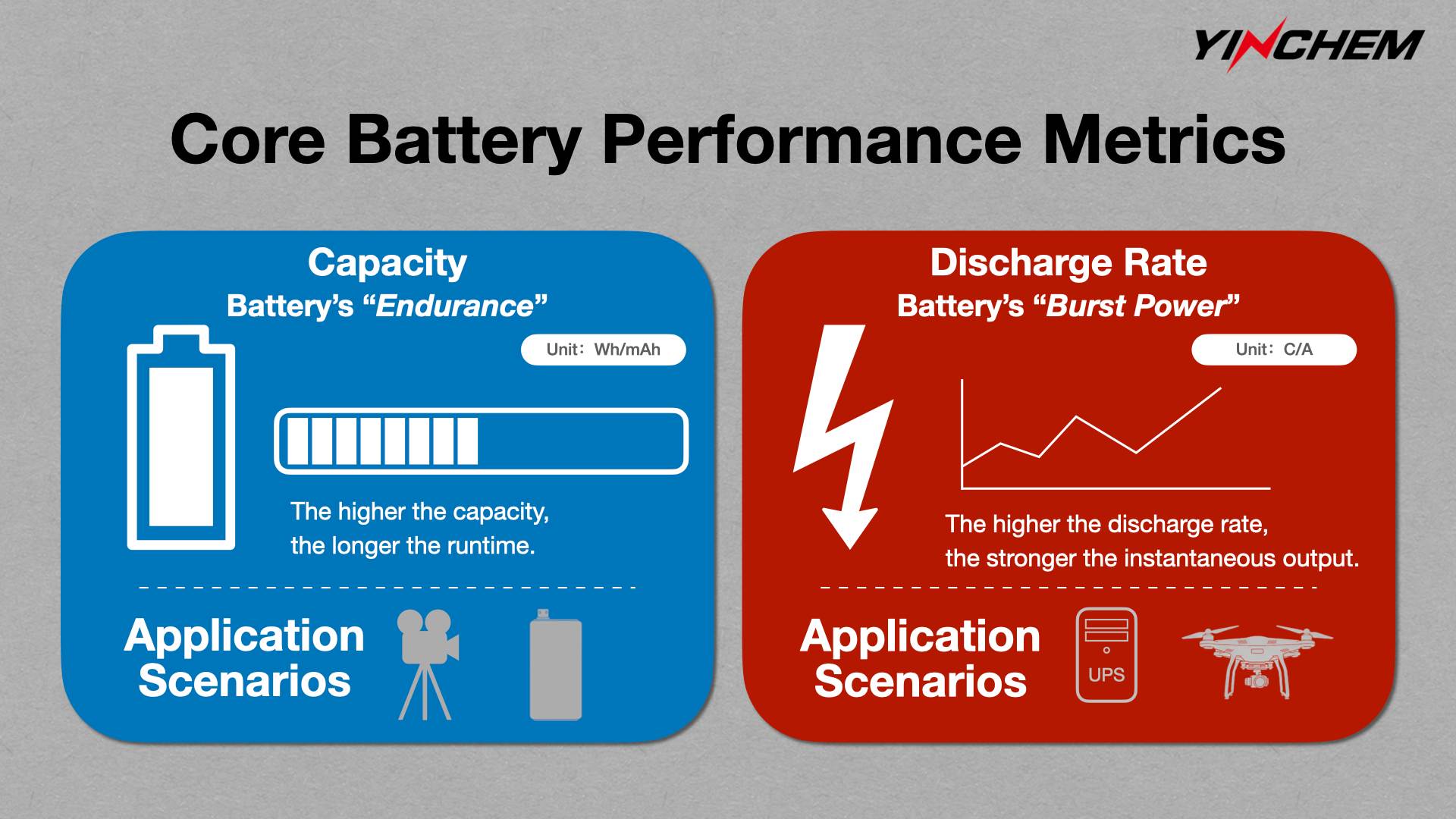
(1)Capacity: The “Endurance” of a Battery
Capacity refers to the total amount of electrical energy that a battery cell can store, typically measured in mAh or Wh. It is the core indicator used to evaluate battery runtime. Simply put, under the same power load, the higher the capacity, the longer the battery can operate.
For example, a battery cell with a nominal capacity of 3400mAh theoretically provides about 36% longer runtime than a 2500mAh battery cell under the same discharge conditions.
Battery cells designed with “high capacity” as the primary objective are defined as capacity-type battery cells. Their core advantage lies in “long-lasting stability”, providing devices with extended and uninterrupted power supply. Therefore, they are widely used in scenarios with extremely high runtime requirements:
· Professional cinematography batteries
· Small electronic devices such as power banks
The common requirement of these devices is stable and continuous power supply without frequent battery replacement, preventing workflow interruptions caused by power loss.
(2)Rate: The “Burst Power” of a Battery
Rate is expressed as C-rate and measures the speed at which a battery charges or discharges. It is defined as current (A) divided by rated capacity (Ah). A 1C rate means the battery can be fully charged or discharged within 1 hour (for example, a 1000mAh battery operating at 1A). Higher C-rates (such as 2C) indicate faster charge and discharge speeds, but also lead to increased heat generation and shorter lifespan.
Simply put, the higher the rate, the stronger the battery cell’s ability to deliver large current output. In scenarios requiring high instantaneous power, the current output becomes more stable, the burst power stronger, and the instantaneous power performance more outstanding. High-rate battery cells can maintain stable voltage without sudden drops or discharge interruptions during high-current demands such as startup, acceleration, and heavy-load operation, enabling faster device response and more stable operation. They are a key technical indicator for high-performance power applications.
Battery cells that emphasize “high-rate discharge capability” are therefore called high-rate battery cells. Their core advantage lies in “instant power output”, meeting the short-term high-power demands of devices. Typical applications include:
· UPS uninterruptible power systems: instant power supply during sudden outages
· Drones: high-power output during takeoff and hovering
The core demand in these scenarios is to release a large amount of energy within a short period to drive devices for high-intensity, high-power operation, where runtime is relatively less critical.
02 | Core Parameter Comparison: Capacity-Type vs High-Rate Battery Cells
To present the differences between these two battery cell types more clearly, we selected two representative products widely used in the industry—the capacity-type battery cell Samsung 18650-35E and the high-rate battery cell DMEGC 18650-25P—for core parameter comparison:
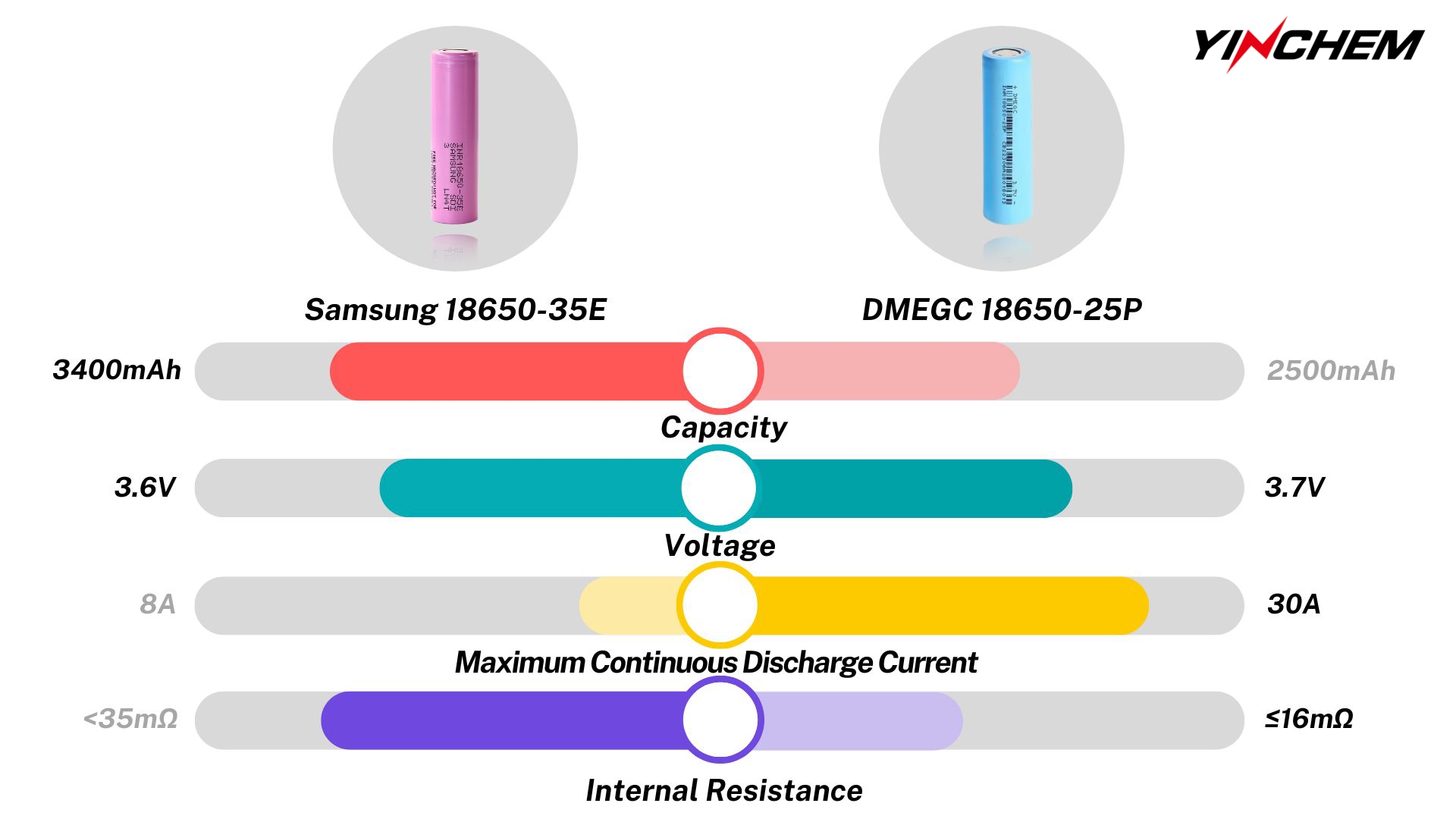
The parameter table already presents the relevant data, but behind the numbers are three differences worth analyzing individually—they correspond to three practical usage dimensions: runtime limit, power limit, and power supply stability.
03|In-Depth Parameter Analysis: Understanding Battery Cell Differences from Three Dimensions
(1)Capacity Difference: The Core Gap in Runtime
As a representative capacity-type battery cell, the Samsung 18650-35E has a nominal capacity of 3400mAh, significantly higher than the 2500mAh of the DMEGC 18650-25P, a difference of 900mAh. This gap directly translates into a clear difference in runtime performance—under the same series-parallel structure and the same load power, a battery pack using Samsung 18650-35E battery cells can provide about 36% longer runtime than one using DMEGC 18650-25P battery cells.
Taking common V-mount batteries as an example, battery cells are typically connected in series to meet voltage requirements and then connected in parallel to increase capacity. Since the voltages of the two battery cells are similar, the voltage after series connection is almost identical, and the runtime difference mainly depends on the number of parallel battery cells:
· To achieve a capacity requirement of 10200mAh, only 3 Samsung 18650-35E battery cells are needed in parallel
· If DMEGC 18650-25P battery cells are used instead, 4 battery cells in parallel are required to approach similar runtime
A greater number of parallel battery cells not only directly increases battery size and weight but also raises manufacturing complexity and overall cost.
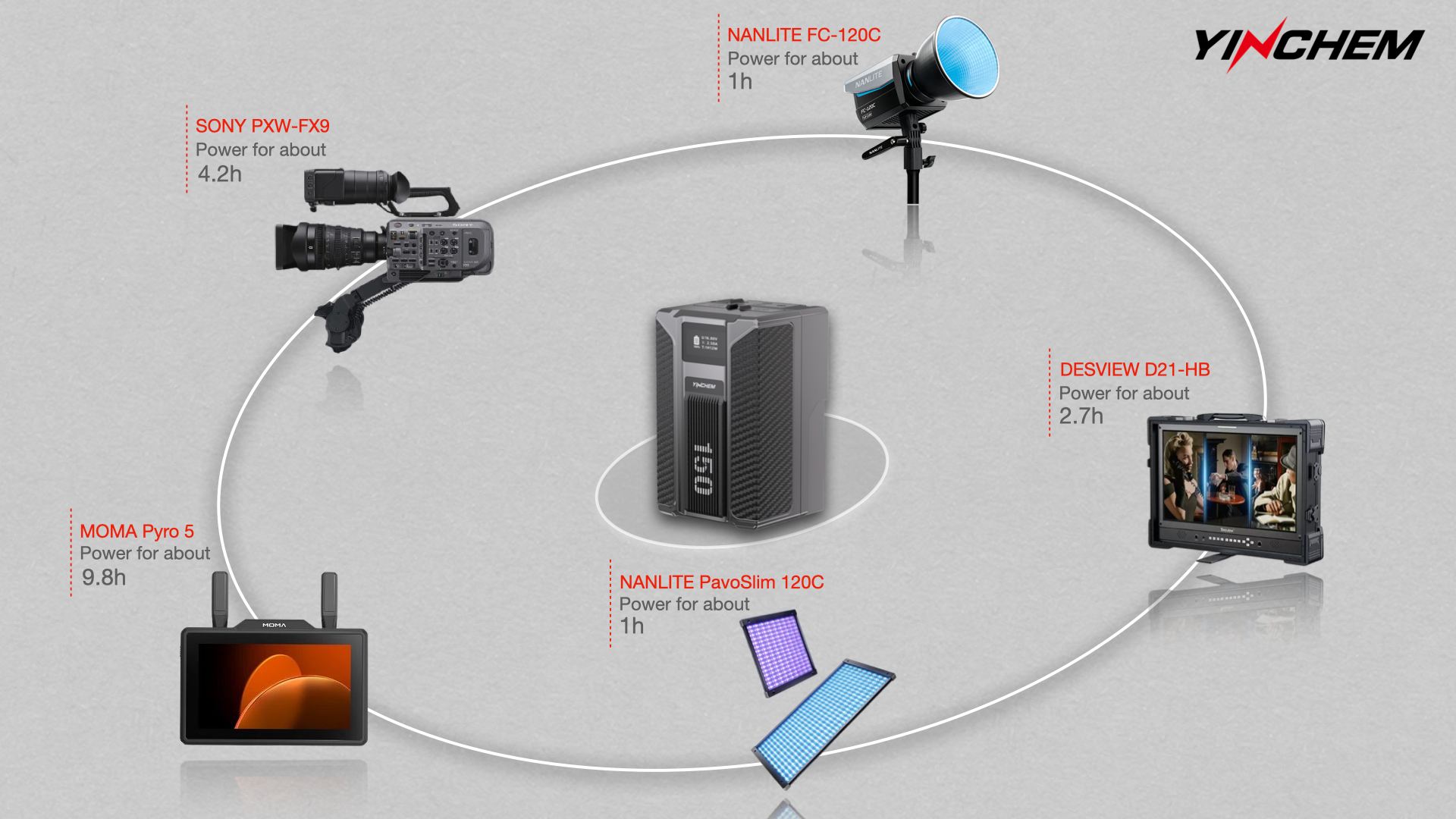
(2)Discharge Capability Difference: A Huge Gap in Instantaneous Power
The core competitiveness of high-rate battery cells lies in their powerful large-current discharge capability. Data comparison shows that the maximum continuous discharge current of the Samsung 18650-35E is 8A, while the DMEGC 18650-25P can reach up to 30A—3.75 times as high. This means high-rate battery cells can release abundant energy in a short period and easily support instantaneous startup and heavy-load operation of high-power equipment.
This performance difference directly determines the application boundaries of the two:
① High-rate battery cells
More suitable for instantaneous high-power scenarios such as drone takeoff power output, heavy-load drilling of electric tools, and emergency power supply for UPS systems during power outages, where high burst power is required.
② Capacity-type battery cells
More suitable for continuous low-power stable power supply scenarios where device power demand is relatively stable, prioritizing long runtime rather than instantaneous high power output.
(3)Internal Resistance Difference: A Key Factor Affecting Power Stability
From the comparison of core parameters, the internal resistance of the DMEGC 18650-25P is <16mΩ, which is significantly lower than the <35mΩ of the Samsung 18650-35E, giving it a clear advantage in overall performance.
Lower internal resistance brings two major performance benefits to battery cells:
① Higher energy conversion efficiency
The smaller the internal resistance, the less heat loss and energy waste during charging and discharging. This significantly improves energy utilization efficiency. Under the same nominal capacity, the battery cell can deliver more usable energy, resulting in better runtime performance.
② More stable power output
Low internal resistance allows faster instantaneous startup response. Under high-power and high-current conditions, it effectively suppresses voltage fluctuations, providing smoother output and significantly improving power supply reliability.
These characteristics are precisely why high-rate battery cells can adapt to high-power application scenarios. During sustained high-current discharge, low internal resistance effectively prevents sudden voltage drops, ensuring stable and reliable operation throughout the entire process and providing secure power support for high-load equipment.
04|Battery Cell Selection Logic for Cinematography Batteries: Scenario Matching Is Key
The performance ceiling of professional cinematography batteries is entirely determined by the quality of the battery cells. Therefore, mainstream brands in the industry always follow the core logic of “scenario matching” when selecting battery cells—prioritizing the most suitable battery cell type based on the actual needs of film equipment.
🔋Mainstream Battery Cell Choices in the Film Industry
Currently, mainstream capacity-type battery cells used in professional cinematography batteries include:
· Samsung 18650-35E: a classic capacity-type battery cell with high capacity, stable discharge, and long cycle life, making it the preferred choice for mid-to-high-end cinematography batteries
· Samsung 21700-50G: a large-capacity battery cell with a nominal capacity of 4850mAh and higher energy density, suitable for large V-mount batteries requiring ultra-long runtime
· LG 18650-MJ1: with a capacity of 3500mAh, excellent discharge stability, and outstanding low-temperature performance, suitable for outdoor shooting in cold environments
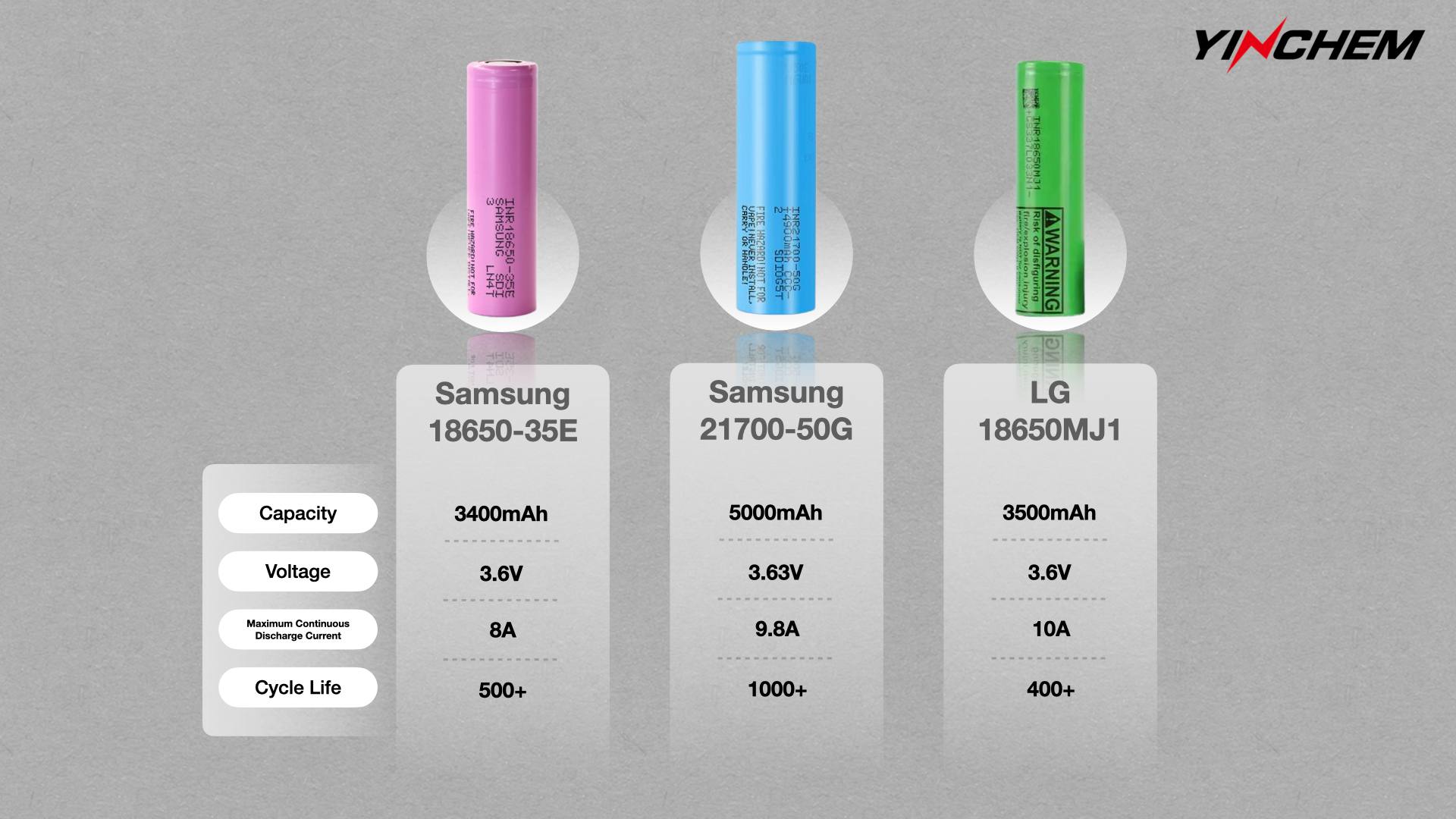
These battery cells share common characteristics: high capacity, stable discharge curves, high energy density, and long cycle life—perfectly matching the core demand of cinematography equipment for “long-duration, stable power supply.”
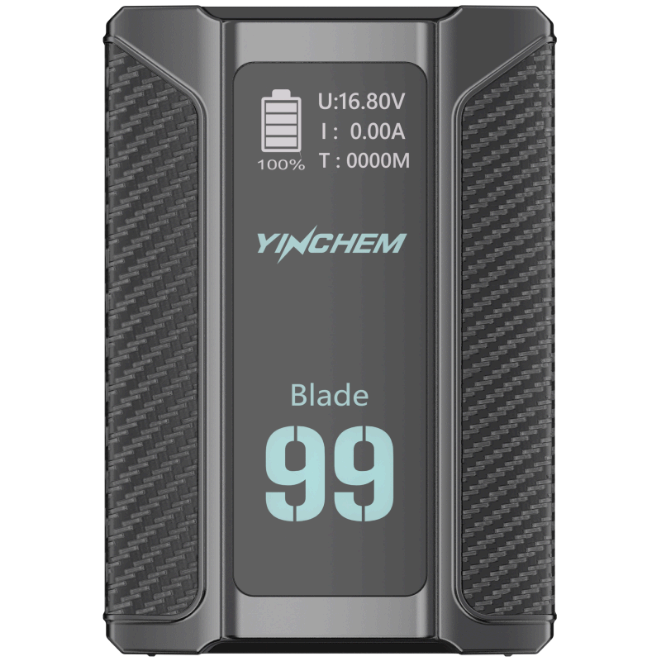
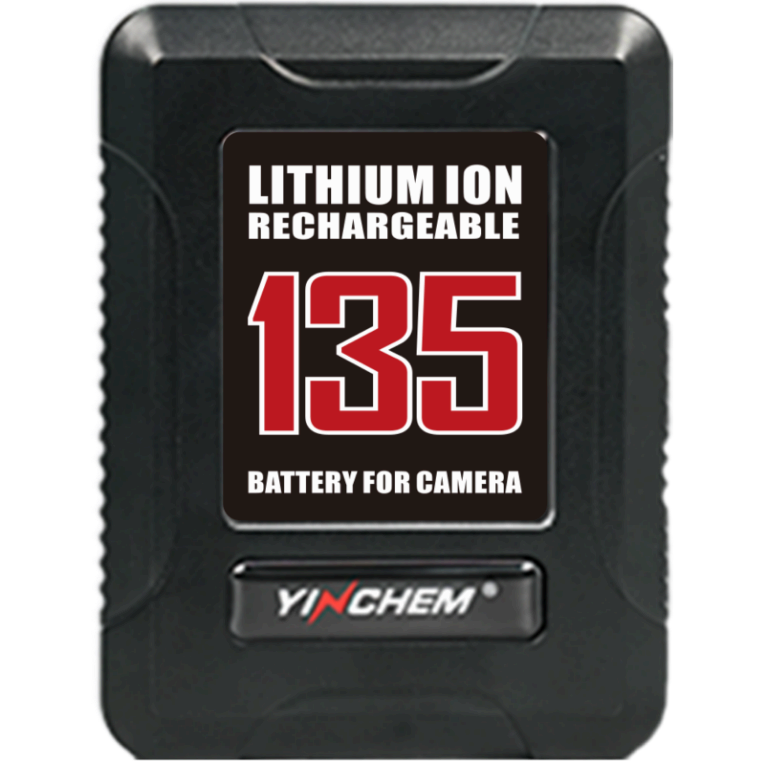
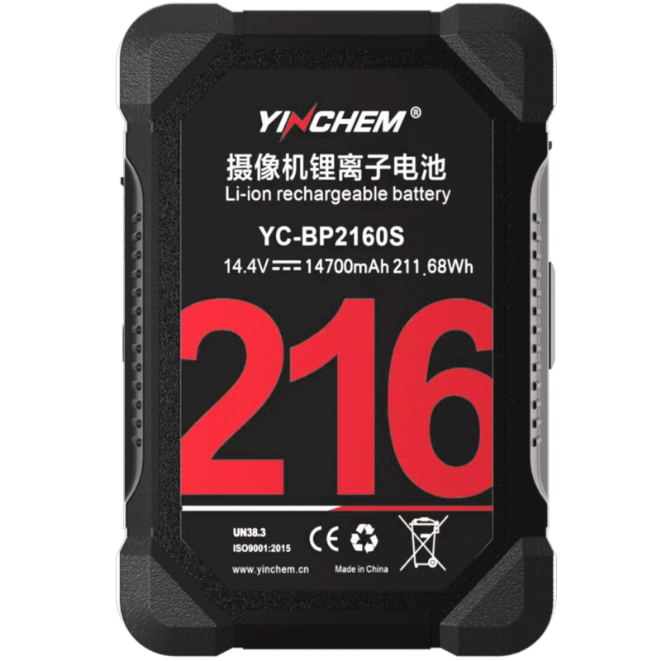
The battery cell selection logic is also directly reflected in our product design: the Blade series and YC-C135S focus on stable runtime with the Samsung 18650-35E battery cell, while the YC-BP2160S is equipped with the Samsung 21700-50G battery cell, designed for shooting scenarios that require ultra-long power supply.
Mainstream high-rate battery cells such as DMEGC 18650-25P and Samsung 18650-25R, although offering advantages of high rate and low internal resistance, have relatively lower capacity and are therefore only suitable for a few special scenarios in the film industry, such as:
· Emergency startup power during outdoor shooting
· Power supply for drone aerial photography equipment
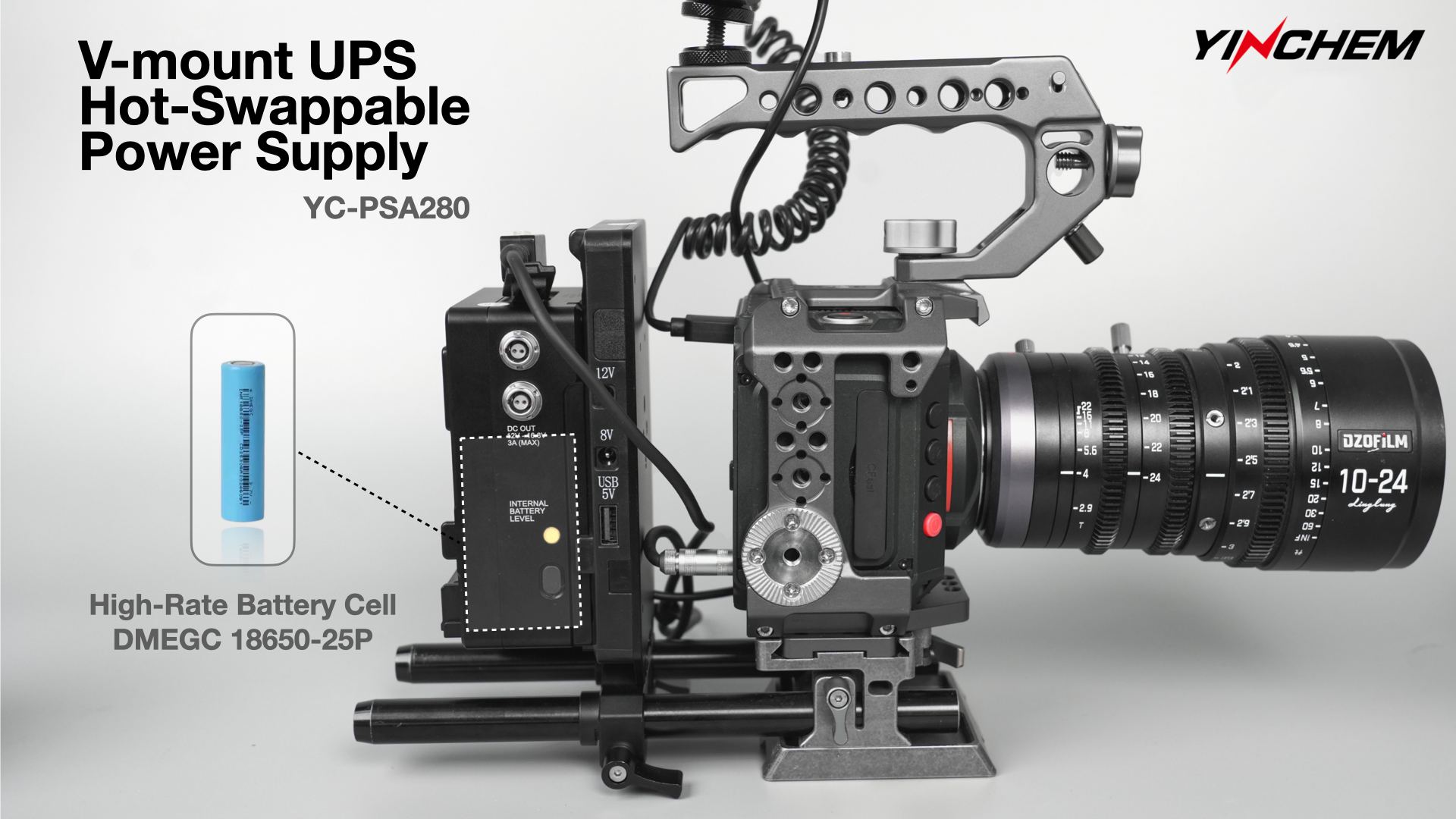
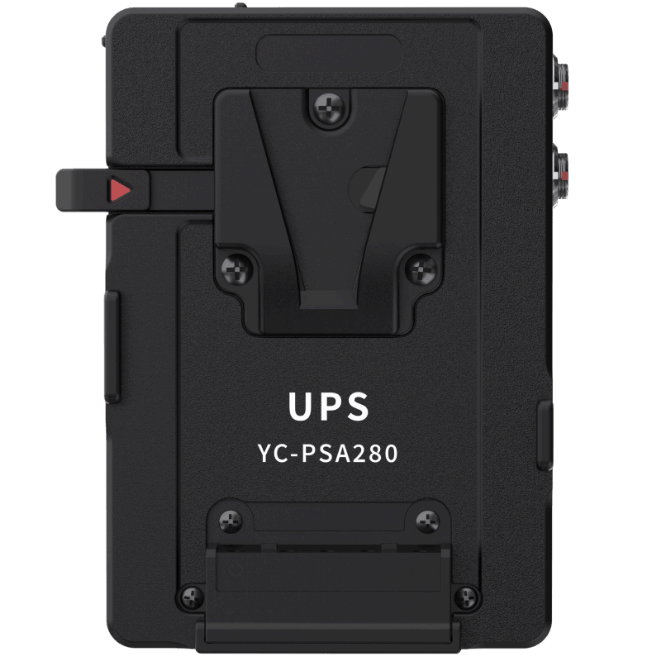
In our product lineup, the V-mount UPS hot-swappable power supply YC-PSA280 uses the DMEGC 18650-25P battery cell.
🎥Power Demand of Film Equipment and Battery Cell Matching
To understand why cinematography batteries prioritize capacity-type battery cells, it is necessary to first understand the typical power range of mainstream film equipment:
| Device |
Power |
| Camera |
30-100W |
| Monitor |
15-30W |
| Wireless video transmitter |
6-20W |
Even when multiple devices are powered simultaneously, the total power consumption usually ranges only between 50–200W. This shows that most film equipment does not require extreme power output; the core pain point is “insufficient runtime” rather than “insufficient power”. Therefore, the characteristics of capacity-type battery cells—“high capacity + stable discharge”—perfectly match the core needs of cinematography production and have become the mainstream choice for professional cinematography batteries.
05|Choosing the Right Battery Cell Is the Core Competitiveness of Professional Cinematography Batteries
In professional film production, “stable runtime” is always the primary requirement for batteries—it not only affects shooting efficiency but also directly impacts equipment safety and production quality. Capacity-type battery cells, with their advantages of high capacity and stable discharge, have become the preferred choice for most cinematography batteries, while high-rate battery cells are only suitable for a few high-power special scenarios.
Only by understanding the core logic of capacity and rate, and recognizing the performance differences behind battery cell parameters, can professionals accurately select the right battery for their filming equipment.







 Company Email:
 Company Address: