The Safety Code of V-Mount Batteries——Internal–External Synergy, Dual-Layer Protection
In the film and television industry, V-Mount batteries have almost become the dedicated power source for professional equipment. They are required to operate continuously under high-power output while enduring frequent plugging and unplugging, constant movement, and a variety of complex environments.
A truly professional V-Mount battery, however, does not rely on its exterior for safety—it is built from the inside out. Today, we take you inside Yinchem batteries to explore the core designs that ensure stable performance under high loads and challenging conditions.
Battery Cells: Not Just “Top Brands,” but Also “Consistency”
Many assume that a battery’s risks primarily come from external impacts or physical damage, but the greatest hazards often come from within—cell inconsistency.
V-Mount batteries use a multi-series, multi-parallel structure, much like a precision gear system. Even minor deviations in a single cell can trigger a chain reaction during high-power discharge, causing localized heat buildup or irreversible damage.
To prevent this, Yinchem not only uses A+ grade cells such as the Samsung 35E but also applies extremely strict screening standards:
Internal resistance deviation: < 1 mΩ
Voltage deviation: < 1 mV
Post-assembly voltage difference: < 3 mV

We invest heavily in these behind-the-scenes processes for one reason: to ensure every cell works in perfect unison under high load, eliminating hidden risks at the source.
Cell Holder: Stable Structure as the Foundation of a Professional Battery
Film sets are unpredictable, with constantly moving camera positions and high-speed car-mounted rigs. V-Mount batteries must not only provide continuous power but also withstand physical shocks.
For this reason, Yinchem introduced specialized cell holders in products like the Blade 150, ensuring each cell remains stable under high load and complex conditions:
Physical cushioning: Independent spacing protects cells from impact, compression, and solder joint damage
Enhanced heat dissipation: Proper spacing forms smooth thermal channels, keeping the entire battery stable under high load
Improved shock resistance: Reinforces vibration tolerance for professional filming and extreme outdoor environments

V-0 Flame-Retardant PCB
Under UL94 flame-retardant standards, V-0 is the highest level: after two burn tests, flames extinguish within 30 seconds with no flaming debris.
Yinchem batteries use V-0 grade flame-retardant material for their BMS PCBs. This means that even in extreme scenarios, such as short circuits or localized overheating, the PCB will not become a fire source, significantly reducing the risk of accident escalation.

BMS Protection Board: Real-Time Battery Safety Guardian
If battery cells are the “heart” of a battery, the BMS is its “brain.”
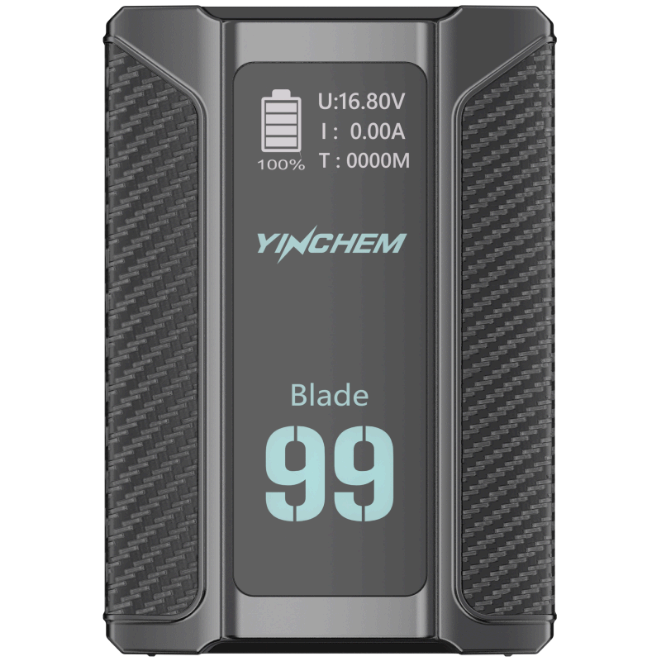
Yinchem V-Mount batteries are equipped with a BMS that provides six layers of safety protection, including temperature protection, short-circuit protection, and input overvoltage protection. In the fourth-generation Blade series, this has been upgraded to 12 intelligent protections, adding safeguards against electromagnetic interference and circuit faults for comprehensive monitoring.

The core responsibilities of the BMS can be summarized in three points:
Real-time monitoring: Tracks the status of every cell
Anomaly alerts: Warns before potential dangers occur
Safety shutdown: Instantly cuts off power in abnormal conditions to maintain battery safety
If the internal architecture is the “core logic” of battery safety, then the external structure is the first “protective shield” against real-world usage. Drops, impacts, frequent plugging and unplugging, long periods of high-power output… all of these harsh conditions continuously test the true reliability of a battery in professional scenarios.
And a truly professional V-Mount battery is far more than “just a power source.” In this section, we continue from the perspective of external structure to explain how Yinchem builds a complete and rigorous safety system.
V-0 Flame-Retardant Shell: A Safety Barrier When It Matters Most
The Yinchem Blade Series uses the same V-0 flame-retardant grade for both the outer shell and the internal BMS board material. But why must the shell also reach V-0? Because it serves as the final physical protection layer for all internal components:
·Control heat sources: Block the spread of flames and heat, keeping risks contained.
·Protect valuable assets: Maximize the protection of costly cameras, lighting equipment, and on-site personnel.
This is an essential baseline safety feature in professional film production.

Multiple Cooling Methods: The Higher the Load, the Safer the Thermal Control
For batteries, thermal runaway is often the most dangerous threat. In the film industry, high-power lights and professional cameras keep V-Mount batteries under sustained heavy load, rapidly increasing heat generation. That’s why, beyond internal heat management, external cooling structures are equally vital.
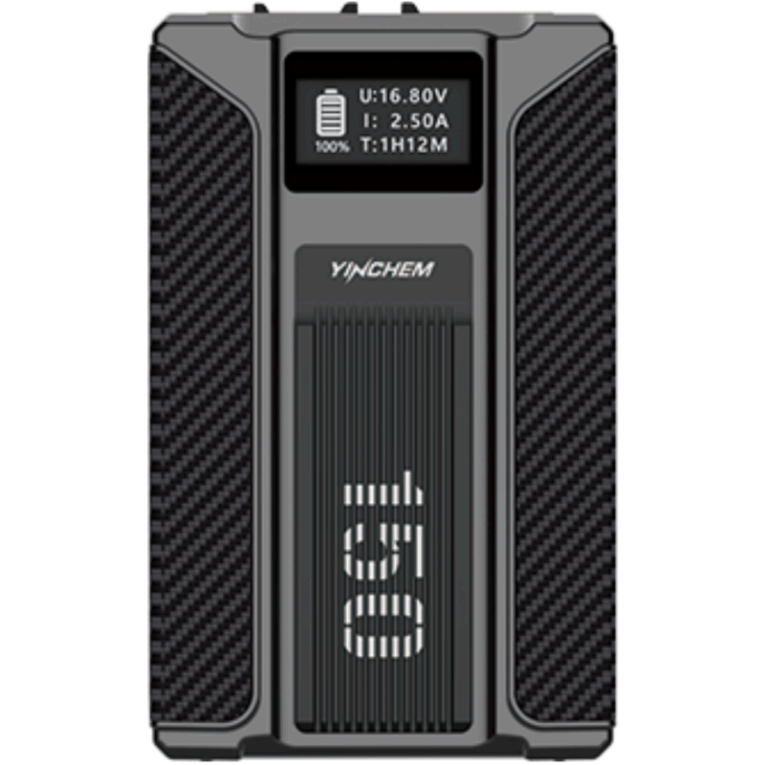
Take the Blade 150S as an example. We designed metal heat-dissipation fins directly on the shell:
·Metal construction accelerates heat conduction
·Large fin surface increases air contact area
·Maintains stable temperature even during prolonged full-power output
More efficient cooling means longer battery lifespan, more stable performance, and reliability even in extreme conditions. For filmmakers, this isn’t just an upgrade—it’s a necessity.

Reinforced Structural Protection: Built for Tougher External Impact
External physical protection directly affects a battery’s durability and safety. Based on extensive feedback from film crews, we implemented targeted structural enhancements across different series:
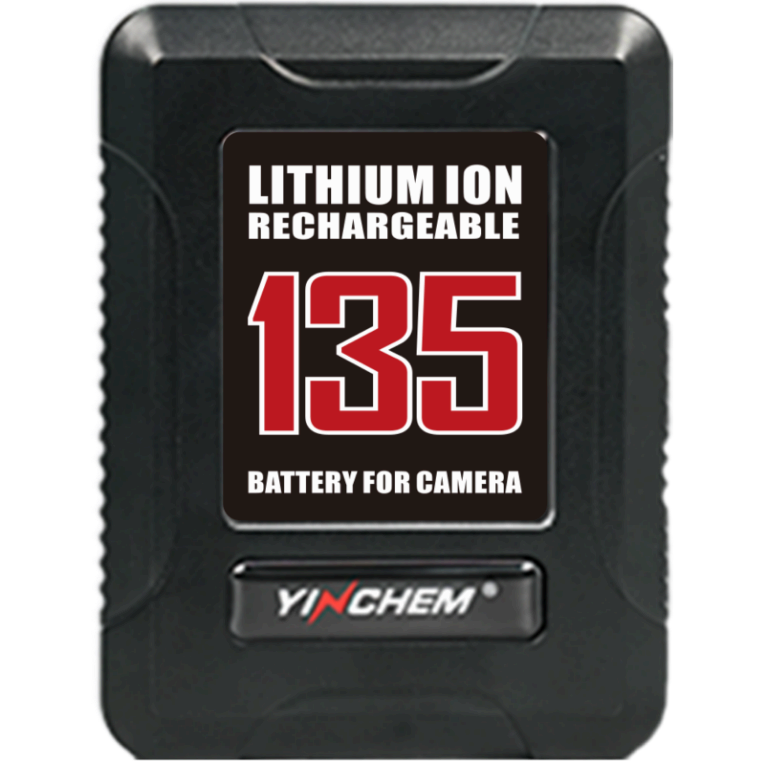
2nd-generation compact batteries: Anti-slip stripes on both sides enhance grip stability, reducing drop risks caused by sweat or quick handling.

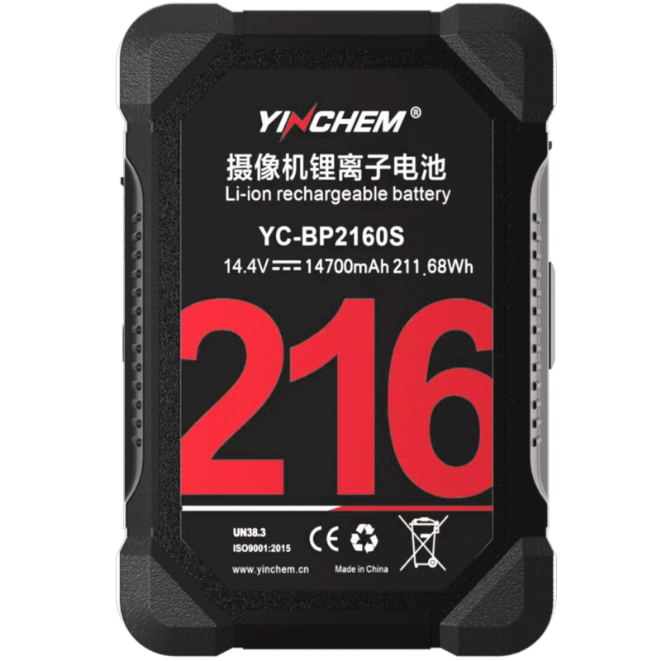
3rd-generation rubber-coated batteries: High-toughness rubber shock absorption added to all four corners to absorb impact, preventing shell cracking and internal short-circuit risks. With its “shockproof and drop-resistant” build, it is especially favored in rental markets.

These subtle design details become crucial safety foundations in demanding, high-intensity shooting environments.
A truly safe battery is never the achievement of a single component—it is the result of an integrated safety system. From internal architecture to external protection, every step we take revolves around one goal:
Making film production safer, more stable, and more efficient.







 Company Email:
 Company Address: